


Health Hub
Having a Dry July has great health benefits. We've brought together a collection of articles that could help you with your Dry July.
AN EXTRA BENEFIT OF YOUR SOBRIETY IS THE ENERGY TO COMPLETE A PAINT PROJECT
By Inspirations Paint on
Paint projects take motivation to start but energy to finish. A known benefit of giving up alcohol for a month is an increase in energy levels, so what better way to channel that than into a paint project!
Make the most of your feel-good, hangover-free weekends this Dry July with a little DIY! Our fantastic campaign partner, Inspirations Paint, is giving Dry July 2025 participants a $30 voucher when you sign up for their Paint Club — redeemable in-store only.
They've also put together five projects you could start and finish this DIY Dry July.
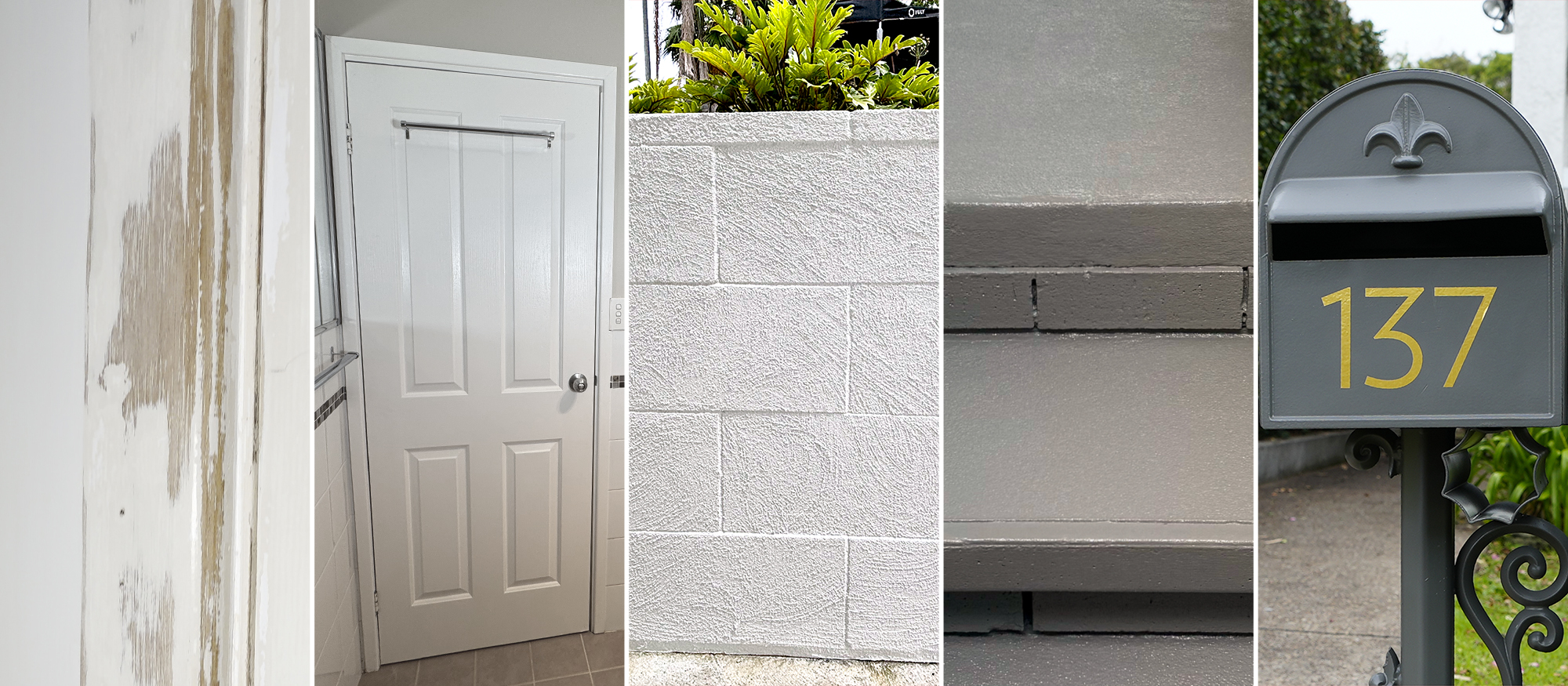
1. How to Fix a Bad Paint Job
A bad paint job comes in many forms; uneven paint colour, drips, bubbles, poor sheen uniformity – you get the picture. One we often see is peeling or flaking paint. There are many reasons paint could be peeling or flaking but before it can be fixed, we need to understand the cause of the defect. One such cause can be the incorrect paint used on the existing surface, most commonly painting a water-based product over an oil-based enamel without the correct preparation.
How can you avoid making this painting mistake?
Let us introduce you to The Metho Test. This test is how you determine what paint was previously used on the surface and is key to ensuring you don’t make the mistake of painting a water-based product over an oil-based enamel.
Here’s how:
Dampen a rag with methylated spirits and rub it on your painted surface.
If the paint transfers to the rag, it’s water based.
If the rag remains paint-free, it’s oil-based enamel.
Once you know what paint was used before you, now you can fix it. Head over to Inspirations Paint’s article How to Fix a Bad Paint Job for the full details.
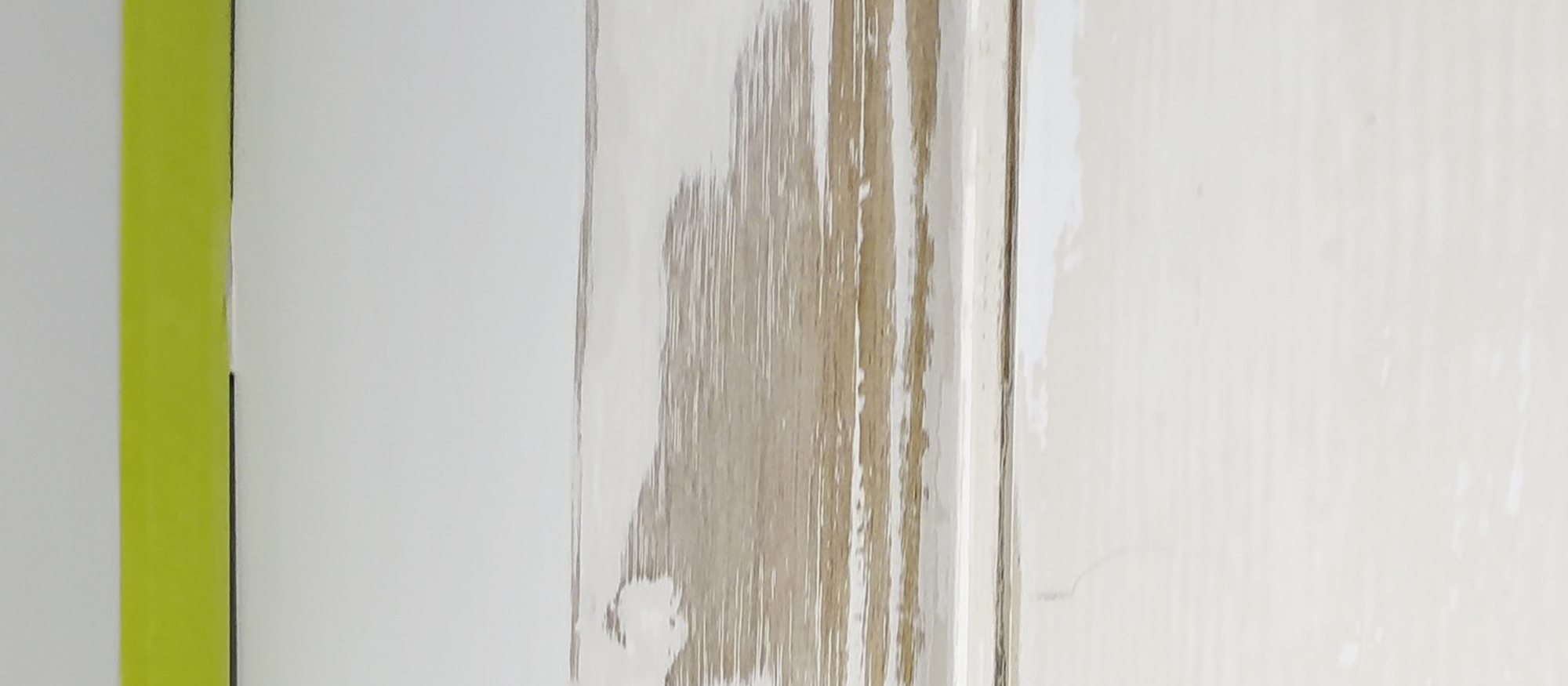
2. How to Repair a Water Damaged Door with Paint
A water-damaged door is an all too familiar sight in bathrooms. Your first thought might be to simply replace the door, but what if we told you that this was an easy fix (sounds too good to be true right?!) as long as the door is not warped or swollen. Rather than buying a brand-new door, in just 5 steps, you can easily fix the water-damage and transform it with the power of paint.
Step 1: Remove Door
Remove the door from the hinges, remove the handles and place it in a well-ventilated area.
Step 2: Sand
With 120 grit sandpaper, sand both sides of the door. Pay particular attention to the water-damaged parts of the door. Step 3: Prime
Apply 1x coat of Dulux Precision Maximum Adhesion Primer to both sides of the door. Cut in with a brush on any intricate features of the door before rolling with a mini roller. Remember to prime the bottom edge of the door. This will help to prevent any future water-damage. Allow to dry fully.
Step 4: Paint
Apply 2x coats of Dulux Aquanamel in your chose colour to both sides of the door. We used Dulux Natural White. Allow to dry between coats.
Step 5: Rehang Door
Once dry, rehang the door on the hinges and attach the handles.
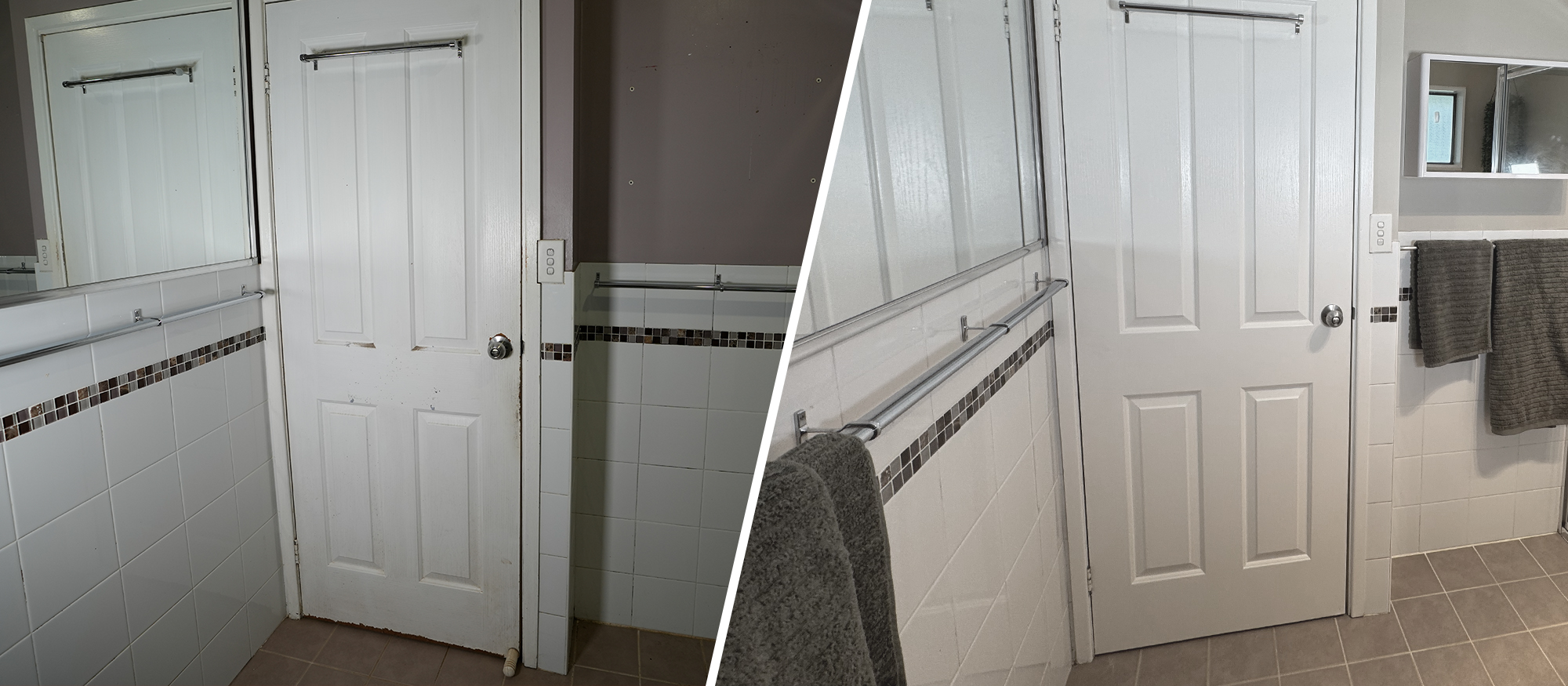
3. How to Paint a Textured Wall
If you’re in love with the Mediterranean look, but don’t have the budget for a rendered finish on your retaining wall, this budget-friendly DIY project is perfect for you. With the Dulux Texture range, you can transform your exterior surfaces with minimal effort and maximum impact.
Step 1: Cling Wrap Test
This step is only applicable to concrete surfaces. Tape a square of cling wrap to the wall and leave it for 30 minutes. Be sure to seal the cling wrap fully with masking film. After 30 minutes, if there is no moisture or condensation present on the cling wrap, it means the internal core of the surface is dry and you are fine to begin painting. However, if there is moisture or condensation, you will need to wait until your retaining wall is dry before painting. Repeat the Cling Wrap Test again before painting.
Step 2: Prime
We began by priming the retaining wall with Dulux Texture primer. Stir the primer thoroughly before applying 1 coat with a Lambswool roller and allowing it to dry. This step can be a two-person job.
Step 3: Paint
Next, we applied 1 coat of Dulux Texture Medium Cover tinted to Dulux Snowy Mountains Quarter using a lambswool mitt in a circular motion. This step is a one-person job as each person will have their own unique way to apply the texture. This will ensure you have a consistent finish.
You also have the option at this point to apply a second coat of texture, depending on the desired look you’re after. We were happy with one coat of texture and opted for one coat of Dulux Weathershield to finish it off.
For the full project details, see how the team at Inspirations Paint painted this Bessa block wall.
4. How to Paint Bare Concrete Paths or Pavers
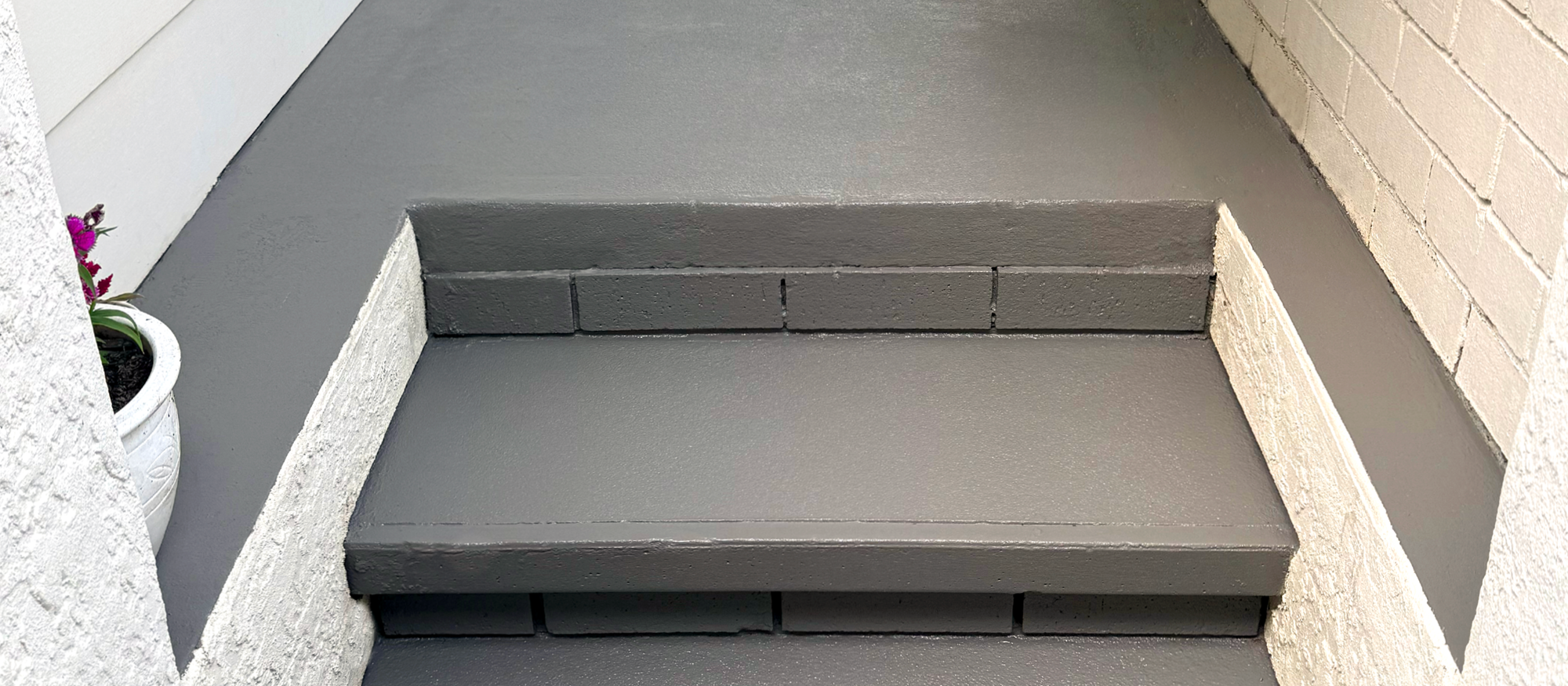
Painting the bare concrete around your home with the Dulux Concrete & Paving range is an easy and achievable way to improve your entryway, paths and pavers. All you need to do is clean, prime and seal your concrete with the steps below to give your concrete surfaces a new lease on life.
Step 1: Clean
Sweep or blow any loose debris from the concrete surface and then pressure wash.
Step 2: Film
Mask off any adjacent metal surfaces with masking film.
Step 3: Etch
Mix 1 part Dulux Concrete & Paving Bare Concrete Etch & Clean with 4 parts water in a plastic watering can. Now it’s time to etch the concrete. Don’t skip this step, it’s what helps your paint adhere to the concrete. Apply the mixture evenly with the can. Scrub the concrete with a hard bristled broom and leave on the surface for 10-15min. Do not allow to dry out in this time.
Step 4: Scrub
Scrub with broom again before washing off with pressure cleaner. Allow to dry completely.
Step 5: Tape
Tape around all remaining edges.
Step 6: Paint
Stir Dulux Concrete & Paving Bare Concrete Primer thoroughly before cutting in with a brush and then rolling on your first coat. Allow to dry for 20min. Apply the second coat then allow to dry for 1 hour.
Step 7: Seal
Stir Dulux Concrete & Paving Coloured Sealer Satin thoroughly before cutting in with a brush and then rolling on your first coat. Work in small sections, slightly overlapping the previous section to mimimise raised edges.
Step 8: Seal Again
Allow to dry fully before applying a second coat.
With the Dulux Concrete & Paving range, painting the concrete around your home is a simple and achievable way to add some colour to your home’s exterior. Head to your local Inspirations Paint store for everything you need for your next project.
To watch the full how-to video, click here.
5. How to Respray a Metal Letterbox

Letterbox need some love? This is a quick and easy DIY project for even the most novice of novice DIYers that will leave you feeling pretty proud of yourself.
Step 1: Wire Brush
Remove any flaking paint from your letterbox with the wire brush.
Step 2: Clean
Clean the letterbox thoroughly with Selleys Sugar Soap and a scourer.
Step 3: Rinse
Hose down to remove the Sugar Soap residue and leave to dry completely.
Step 4: Tape
Using masking tape, cover up any areas of the letterbox you don’t want to spray paint.
Step 5: Prime
Spray 1x coat of Dulux Metalshield Etch Primer on to your letterbox. Allow to dry.
Step 6: Paint
Spray 1x coat of Dulux Metalshield in your chosen colour. Once dry, spray 1 or 2 more coats until the desired coverage is achieved.
Bonus Step:
Once your topcoat is dry, apply a new set of numbers to your letterbox.
DIY paint project options are endless and the team at Inspirations Paint are full of all the advice you need to start and finish your paint project this DIY Dry July.
You may also like

What Happens To Your Body When You Give Up Alcohol For One Month
By Chloe Mcleod on
We all love to indulge in alcohol every now and then, but a night out with friends brings social pressures in regards to frequent drinking. It can feel impossible to dodge having a drink when you want to be part of the group vibe - and before you know it, you’re waking up with a dry mouth and a nasty hangover again.
Dry July is a great way to reassess your relationship with alcohol consumption and see the health benefits of taking a month off. If you’re signing up to raise money, you’ll also be helping people with cancer.
Here are a few ways the human body can benefit from abstaining from alcohol for a whole month.

#1 Improvements to mental health
Alcohol may seem like a mood elevator when you’re dancing and having a great time...

Why are young people drinking less than their parents’ generation did?
By Sarah J MacLean, Amy Pennay, Gabriel Calluzi, John Holmes and Jukka Törrönen on
As we head towards the end of the year, office get-togethers, Christmas lunches and New Year’s parties are upon us. It seems like a prime opportunity for young people to be drinking the night away.
But something unexpected has happened since the start of this century. Young people in Australia, the UK, Nordic countries and North America have, on average, been drinking significantly less alcohol than their parents’ generation did when they were a similar age.
During COVID lockdowns, some surveys indicate this fell even further.
Our research suggests this is unlikely to be due simply to government efforts to cut youth drinking. Wider social, cultural, technological and economic changes seem to be key to these declines.
Researchers...

Navigating drinking culture in the workplace when you're sober
By ABC Everyday / By Flip Prior on
This year, I've had plenty of time to reflect on what influenced my past drinking habits since quitting on January 1 — and colleagues have emerged as a strong theme.
Look, I'm not about to try to blame Bob in accounts for my own after-work boozing, but given how much time most of us spend at work (and how stressful that environment can be) it's not surprising workmates loom large in shaping drinking behaviour.
Hanging out with colleagues in social situations often brings a not-so-subtle pressure to drink — it's ubiquitous, especially in the media industry, and opting out can feel uncomfortably weird.
And like lots of situations in which drinking is involved, habits can be ingrained after many years until they eventually feel normalised...