Beneficiary

The Royal Melbourne Hospital

Donate to The Royal Melbourne Hospital

27 Supporters

Raised

$1,755.30

Make a Difference


Sign up to Dry July 2026 and raise funds for The Royal Melbourne Hospital.

Spread The Word


Share this page to get friends to donate:

Leaderboards


Fundraising For

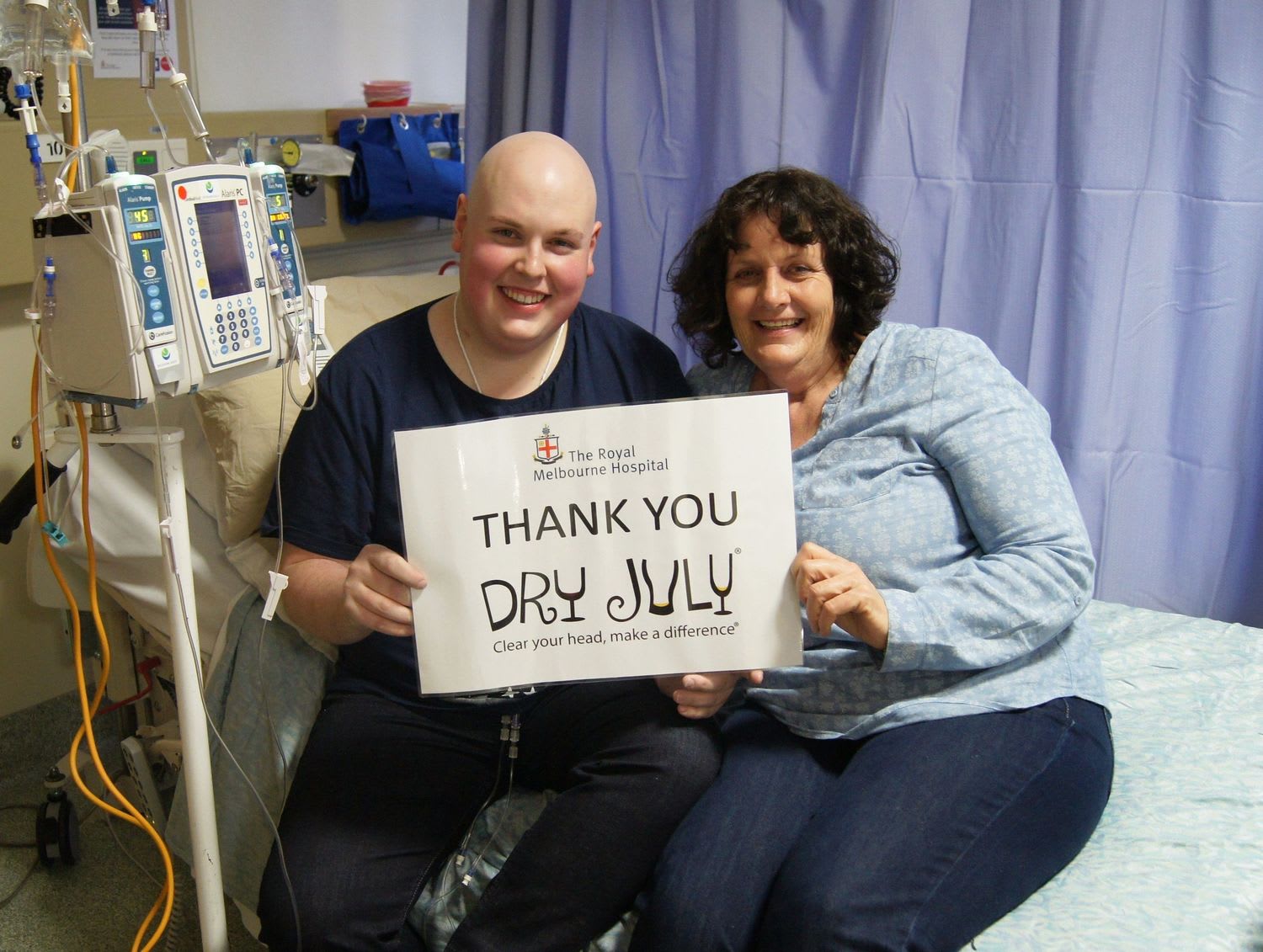
Your support helps improve access to specialised care and equipment, helps patients maintain their strength and wellbeing, and provides practical comfort to patients and families during the toughest times of their lives.

About Us

By fundraising for the Royal Melbourne Hospital, you are supporting one of Victoria’s largest providers of cancer care, treating more than 37,000 patients every year.

We believe that every person facing cancer deserves the best possible care: not just world-class treatment, but also comfort, connection, and dignity.

In 2026, the RMH has identified more than $43,000 worth of patient-focused projects and equipment that will directly enhance care across multiple wards and services. With your help, just some of the projects Dry July seeks to fund include:
100 Patient Care Packs supporting patients attending the Complex Wound Clinic, offering essential items that support healing and recovery.
Purpose-designed bereavement support bags – providing a personalised, practical way to provide comfort to families who have lost a relative, ensuring their belongings are returned to families with dignity.
Specialised medical equipment – including devices which help clinicians locate veins more easily, improving patient comfort.
Exercise equipment for patients – supporting patients in Haematology and Bone Marrow Transplant services.
Providing high-protein, healthy comfort food options – supporting patients receiving treatment in the Day Medical Unit.
Ward equipment – including adjustable overbed tables that improve comfort, accessibility and independence during treatment and recovery.
Together, these projects demonstrate how every Dry July donation helps create a better experience for patients and families at the RMH.

Supporting the RMH as a Leading Cancer Provider
As a founding partner of the VCCC Alliance — Australia’s first comprehensive cancer centre — bringing together top hospitals, research institutes, and universities to drive innovation in cancer care, research, and education.

Our cancer services span a wide range of specialties including breast, lung, gastrointestinal, neurological, urological, head and neck, and skin cancers. As a major teaching hospital, we combine cutting-edge treatment, world-class research, and compassionate care to support patients through every stage of their cancer journey.

Latest Updates


5 West Renovation

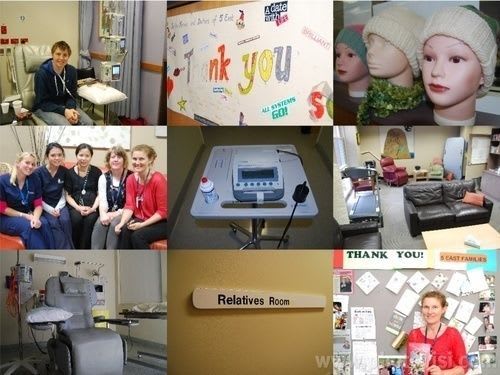
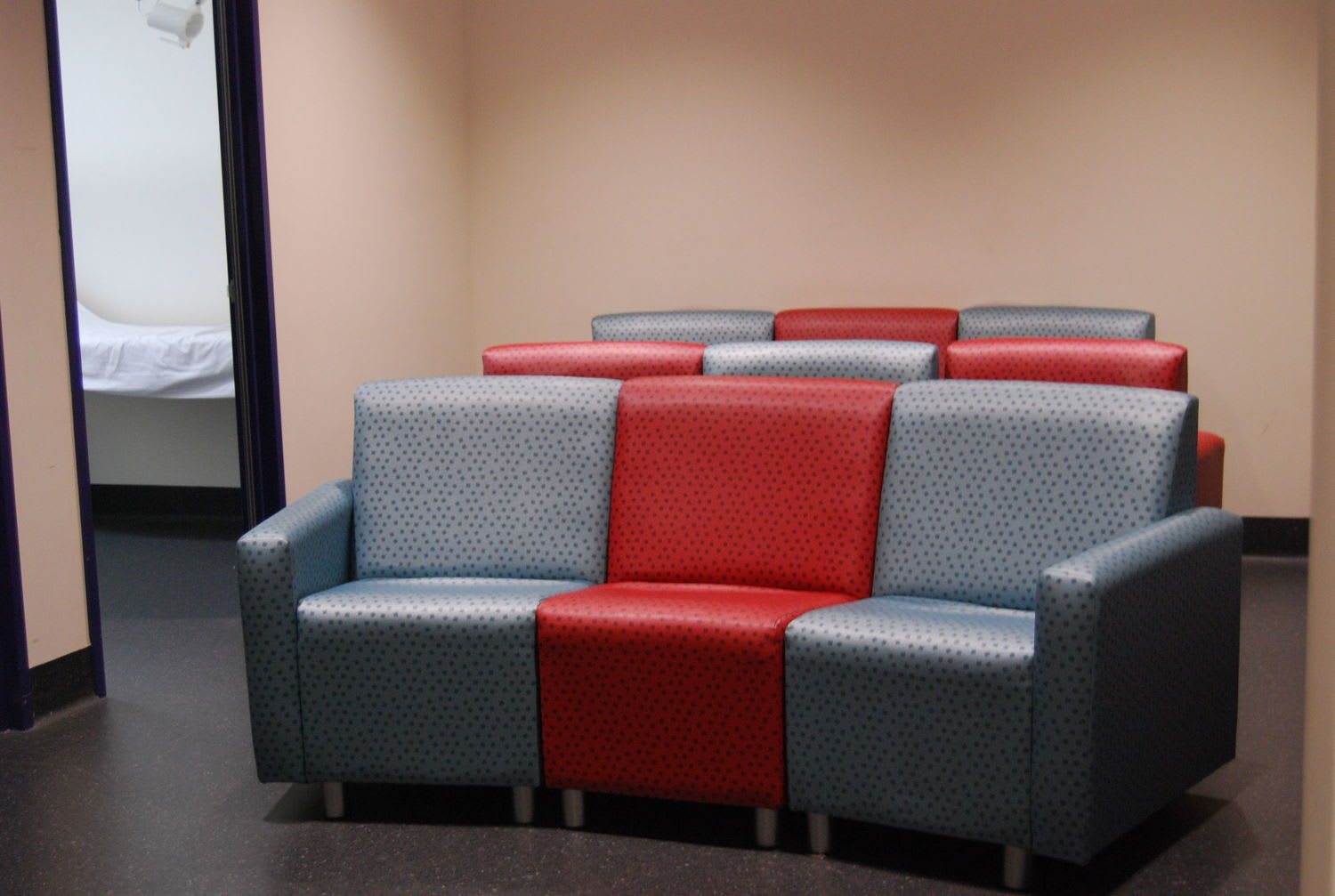
RMH used funds from Dry July to improve the day treatment area in 5 West, including renovation and painting, purchase of new treatment chairs, and installation of new waiting area chairs.

Rooftop Garden Retreat at Royal Melbourne Hospital

A suitable open space for a new Rooftop Garden Retreat has been allocated on the top of the infill building on the 5th floor of the Royal Melbourne Hospital. This outdoor space will be furnished with plants and suitable seating and secure access from the main block, for cancer patients and their carers to access.

Funds from Dry July 2012 and 2013 are going towards making this project a reality for cancer patients at the hospital.

The environment of The Royal Melbourne Hospital in a highly urbanised area restricts access to the outside world, particularly for admitted patients. The only current option for cancer patients is to head outside is the hospital main entrance, on a busy metropolitan street. There is not currently a welcoming space for those seeking rest and solitude.

Patients at staff look forward to the completion of the retreat.

Music Therapy Equipment for Royal Melbourne Hospital

Royal Melbourne Hospital (RMH) has enjoyed the sounds of Music Therapy since 1998. Leading the team is Emma O’Brien, a trained vocalist and professional music therapist who is incredibly passionate and dedicated to the patients at RMH, music, and their new recording studio.

Emma’s journey at RMH started when she was a student, who offered her music therapy services for 6 months for free. It was here she began engaging with cancer patients through music.

At the end of Emma’s 6 months at RMH she left. The patients and nursing staff began to complain about her absence and noticed a significant difference when there was no longer Emma and her music floating through the corridors. Soon after, she was employed by the hospital and still is to this day.

Today, RMH houses it’s very own recording studio to help with the course of music therapy. Recording patients’ music is part of the process and it’s something for them to share with their family and friends. Emma said, “The beauty of having a room like this is you can bring the patients to this space, they’re not inhibited. They can play on the piano; they can record their songs in a space that’s safe but outside the normal hospital environment.”

A recording studio is a very different facility for a normal hospital to house, but essentially it came down to what the patients needed. Before the recording studio existed at RMH, Emma travelled with patients to out-sourced studios for patients to record their music. However, some were not well enough to make the trip.

Dry July has got behind music as a complementary therapy by funding microphones, keyboards, a Mac computer, iPad and iPods and the pro-tools software needed for the recording studio.

Before patients start the music therapy program they don’t necessarily have to have any knowledge in music. Music therapy offers many levels of involvement to cater for each patient’s needs, the program can provide patients with an iPod to listen to relaxation music, an iPad filled with 3,000 pieces of sheet music so patients can listen to Emma and her staff play live music of their choice, or they can pick up a range of instruments and play, learn to play and compose.

Emma specialises in a writing song method, specifically formulated for cancer patients at the bedside. Emma said, “The idea is you get their song out of them, I don’t write a song for them, I help them find their song. There is quite a subtle difference in that and a big difference.”

Emma has almost finished her PHD on this very subject. 50 patients at RMH participated in her research. Emma said “there are some biophysical things you can measure but we went for quality of life and profile of mood states, because what we do know is if your quality of life is better you do better, and if you’re coping better in terms of mood you’re going to do better.”

Emma’s journey at RMH started when she was a student, who offered her music therapy services for 6 months for free. It was here she began engaging with cancer patients through music.

At the end of Emma’s 6 months at RMH she left. The patients and nursing staff began to complain about her absence and noticed a significant difference when there was no longer Emma and her music floating through the corridors. Soon after, she was employed by the hospital and still is to this day.

Today, RMH houses it’s very own recording studio to help with the course of music therapy. Recording patients’ music is part of the process and it’s something for them to share with their family and friends. Emma said, “The beauty of having a room like this is you can bring the patients to this space, they’re not inhibited. They can play on the piano; they can record their songs in a space that’s safe but outside the normal hospital environment.”

A recording studio is a very different facility for a normal hospital to house, but essentially it came down to what the patients needed. Before the recording studio existed at RMH, Emma travelled with patients to out-sourced studios for patients to record their music. However, some were not well enough to make the trip.

Dry July has got behind music as a complementary therapy by funding microphones, keyboards, a Mac computer, iPad and iPods and the pro-tools software needed for the recording studio.

Before patients start the music therapy program they don’t necessarily have to have any knowledge in music. Music therapy offers many levels of involvement to cater for each patient’s needs, the program can provide patients with an iPod to listen to relaxation music, an iPad filled with 3,000 pieces of sheet music so patients can listen to Emma and her staff play live music of their choice, or they can pick up a range of instruments and play, learn to play and compose.

Emma specialises in a writing song method, specifically formulated for cancer patients at the bedside. Emma said, “The idea is you get their song out of them, I don’t write a song for them, I help them find their song. There is quite a subtle difference in that and a big difference.”

Emma has almost finished her PHD on this very subject. 50 patients at RMH participated in her research. Emma said “there are some biophysical things you can measure but we went for quality of life and profile of mood states, because what we do know is if your quality of life is better you do better, and if you’re coping better in terms of mood you’re going to do better.”

Music therapy at RMH started small but now it employs 3 music therapist part time, at the same time Emma and her team are always researching what they’re doing and assessing the impact. Emma said, “I think you have to believe what you’re doing is going to make a difference.”

The response Emma has received from patients about the program is overwhelming. Patients often say to Emma, “I feel like myself again in music therapy”, and Emma said “That’s just another consequence of cancer, you stop being yourself and become the illness, and people sometimes feel like a burden. Music therapy allows patients to create, share and write songs to give to family as presents. Family and friends come to see them and patients say ‘Look what I did today’”

Music therapy at RMH started small but now it employs 3 music therapist part time, at the same time Emma and her team are always researching what they’re doing and assessing the impact. Emma said, “I think you have to believe what you’re doing is going to make a difference.”

The response Emma has received from patients about the program is overwhelming. Patients often say to Emma, “I feel like myself again in music therapy”, and Emma said “That’s just another consequence of cancer, you stop being yourself and become the illness, and people sometimes feel like a burden. Music therapy allows patients to create, share and write songs to give to family as presents. Family and friends come to see them and patients say ‘Look what I did today’”

Electronic Air Lock Doors for BMT

Dry July funds were used to install electronic air lock doors for ward 5 East (BMT) at Royal Melbourne Hospital. Rigorous infection control measures need to be followed to protect patients in this ward who are highly susceptible to common illnesses.

Treatment Chairs

Royal Melbourne Hospital used funds from Dry July to purchase new treatment chairs. Patients spend a lot of time in these chairs, so having newer, more comfortable chairs can make a big difference!

Donate to The Royal Melbourne Hospital